The emergence of the Thulium Fiber Laser (TFL) marks the most significant leap in surgical laser technology in the last 30 years. While the Holmium:YAG (Ho:YAG) laser has long been the "gold standard" for lithotripsy and soft tissue surgery, TFL technology is rapidly redefining clinical expectations through its precision, efficiency, and unique physical properties.
However, the high-frequency nature of TFL systems places unprecedented demands on the delivery system—the laser fiber. This guide explores the physics of TFL and the critical role of high-quality Holmium Fiber in achieving optimal surgical outcomes.
The Physics of TFL: Why 1940nm Matters
The Thulium Fiber Laser utilizes a silica fiber doped with Thulium ions as the gain medium. Unlike the flashlamp-pumped crystal used in Ho:YAG lasers, TFL is diode-pumped, resulting in a continuous or "SuperPulsed" beam with a wavelength of 1940nm.
The Water Absorption Advantage
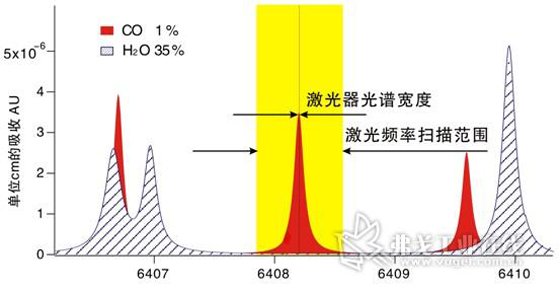
The 1940nm wavelength aligns almost perfectly with a significant peak in the water absorption spectrum. As shown in clinical studies, the water absorption of TFL is approximately 4 times higher than that of Holmium lasers. This leads to shallower tissue penetration and higher cutting precision.
Technical Comparison: TFL vs. Ho:YAG
Understanding the technical differences is essential for selecting the right surgical equipment and consumables.
Critical Fiber Requirements for TFL Systems
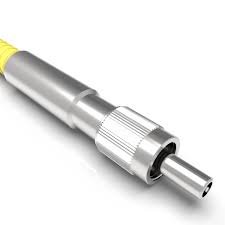
While the TFL generator is the heart of the system, the Holmium Fiber acts as the "artery." Due to the high frequency and beam characteristics of TFL, the delivery fiber must meet specific criteria:
Small Core Diameter Compatibility
Because TFL produces a high-quality, stable beam (low Beam Parameter Product), it can be coupled into extremely thin fibers without energy leakage.
- 200µm Fibers: Ideal for flexible ureteroscopy, allowing for better irrigation and maximum scope deflection.
- Requirement: High-purity silica cores are mandatory to handle the power density.
Thermal Management and High Frequency
TFL operates at frequencies up to 2000Hz. Although the peak power is lower than Ho:YAG, the constant energy flow creates significant heat at the fiber tip.
Solution: Premium Holmium Fiber with heat-resistant cladding is essential to prevent "burn-back" and fiber tip degradation during long procedures.
Primary Clinical Applications
Urology: The "Dusting" Revolution
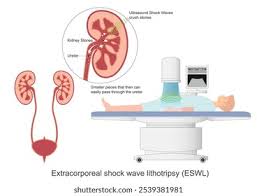
TFL has transformed stone management. By using high frequencies, TFL creates a "vortex" effect that grinds stones into fine, silt-like dust (typically <100µm), eliminating the need for baskets and reducing surgery time.
Soft Tissue: TfLEP (Enucleation of the Prostate)
In BPH treatment, the 1940nm wavelength allows for:
Near-instantaneous hemostasis (a virtually bloodless field).
Sharper dissection planes compared to traditional lasers.
Conclusion: Synergy Between Laser and Fiber
The Thulium Fiber Laser is a powerful tool, but its performance is capped by the quality of the delivery fiber. To prevent premature fiber failure and ensure patient safety, surgeons should rely on premium consumables.
Our Holmium Fiber range is fully optimized for both traditional Holmium generators and modern TFL systems, providing the durability and flexibility required for the most challenging endoscopic procedures.