Thulium Laser: The 2025 Ultimate Guide to Treatment, Wavelength & Medical Applications
Introduction
In the rapidly evolving landscape of medical technology, lasers have become indispensable tools, offering precision and minimally invasive solutions. Among these, the Thulium Laser has emerged as a standout technology, particularly in its fiber laser form. If you’re a medical professional looking to upgrade your practice, a procurement officer evaluating options, or simply seeking to understand this advanced tool, you may be asking: What is Thulium Laser used for? How does its specifi Thulium Laser wavelength translate to clinical benefits? And what determines the Thulium Laser price? This 2025 guide will demystify Thulium Laser technology, from its core physics to its diverse clinical applications and the ecosystem of laser peripherals that support its operation.
What is a Thulium Laser? Demystifying the Core Technology
At its heart, a Thulium Laser is a solid-state laser that utilizes the rare-earth element thulium (Tm) as its active gain medium. The most clinically significant form is the Thulium Fiber Laser (TFL), where the thulium-doped medium is housed within a flexible optical fiber. This design offers superior beam quality, efficiency, and stability compared to traditional rod-based systems. The key to its medical efficacy lies in its Thulium Laser wavelength. These lasers typically operate in the range of 1.94 to 2.1 micrometers (µm), with a strong peak around 1.94 µm. This wavelength is near the peak absorption coefficient of water, which is the primary component of human soft tissue. This means the laser energy is highly absorbed in a shallow depth, leading to precise vaporization and cutting with excellent hemostasis (control of bleeding) and minimal thermal damage to surrounding tissues. Thulium Laser fiber delivery systems are crucial. The laser energy is transmitted from the generator to the surgical site through flexible, medical-grade optical fibers. These fibers come in various core diameters (e.g., 100µm, 200µm, 365µm) and coatings, which are selected based on the procedure to balance precision, power delivery, and durability.
What is Thulium Laser Used For? Diverse Clinical Applications
The unique properties of the Thulium Laser have led to its adoption across multiple medical specialties. Its applications answer the core question of what Thulium Laser is used for with impressive breadth.
1. Urology – A New Gold Standard:
The Thulium Fiber Laser has revolutionized endourology. It is extensively used for: Lithotripsy (Stone Dusting): TFL excels at fragmenting kidney and ureteral stones into fine dust with high efficiency. Multiple studies and meta-analyses have shown that compared to the traditional Holmium:YAG laser, TFL offers a higher stone-free rate, shorter operation time, and reduced lasing time. Endoscopic Enucleation of the Prostate (EEP): For treating benign prostatic hyperplasia (BPH), Thulium laser enucleation (ThuLEP or ThuFLEP) is a highly effective and safe procedure. It allows for the precise removal of obstructive prostate tissue with minimal bleeding and quick patient recovery.
2. Plastic & Aesthetic Surgery – Precision for Face and Body:
Thulium laser for face and body procedures is a growing application due to its precision. It is used in: Soft Tissue Dissection: In procedures likefacelifts (SMAS lifting), blepharoplasty, and mammoplasty, the Thulium laser allows for bloodless, precise dissection through fibrous tissue, which is particularly beneficial for patients with previous scarring from cosmetic treatments. Aesthetic Skin Treatments: Non-ablative fractional Thulium Laser treatment at 1.927 nm is used for skin resurfacing, treating actinic keratosis, dyschromia, and improving skin texture and laxity across all skin types.
3. Other Surgical Specialties:
Its hemostatic cutting ability makes it valuable in otolaryngology (ENT) for vocal cord surgery and in general surgery for the resection of soft tissues.
Thulium Laser for Face: Aesthetic and Reconstructive Precision
The application of Thulium laser for face deserves special focus. In plastic surgery, it addresses a significant challenge: dissecting through fibrotic scar tissue caused by prior aesthetic procedures. Traditional scalpels or electrocautery can struggle with this, but the Thulium laserenables clean dissection with simultaneous coagulation of small vessels. Clinical studies have demonstrated its effectiveness in vivo, with histological analysis confirming minimal critical damage to surrounding skin structures when used with appropriate parameters (e.g., with hydrodissection at 20W power). This translates to potentially reduced bruising, swelling, and risk of hematoma for patients undergoing facial rejuvenation surgery.
Understanding the Ecosystem: Laser Peripherals & System Components
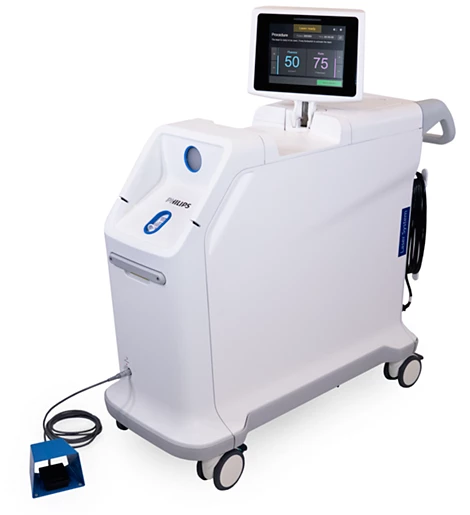
A complete Thulium Laser system is more than just the generator. The laser peripherals are vital for its function, safety, and versatility: Laser Fibers: As mentioned, these are the delivery tools. Reusable and single-use fibers are available, with different tips (flat, ball, tapered) for specific tasks like cutting or dusting. Endoscopes and Scopes: In urology and surgery, the laser fiber is channeled through a ureteroscope, cystoscope, or hysteroscope to reach the internal treatment site. Laser Consoles/Generators: This is the main unit that houses the laser source. Modern TFL generators are often compact, air-cooled, and feature user-friendly interfaces with preset modes for different procedures. Accessories: This includes foot pedals for control, cooling systems (for some high-power models), training simulators, and protective eyewear specific to the Thulium wavelength.
Factors Influencing Thulium Laser Price
The Thulium Laser price is not a fixed number and can vary significantly based on several factors, which is crucial for procurement decisions: Technology Type: A high-power Thulium Fiber Laser system with advanced pulse modulation capabilities will command a higher price than a basic lower-power solid-state Thulium:YAG system. Power Output: Systems are rated by their average output power (e.g., 30W, 60W, 120W). Higher power, needed for efficient stone dusting or rapid tissue ablation, increases cost. Brand and Origin: Established medical device manufacturers and systems with extensive clinical validation and support networks typically have higher price points. Feature Set: Integrated cooling systems, MOSES-like pulse modulation technology, touchscreen interfaces, and extensive procedural presets add to the cost. Package and Peripherals: The price may be for the generator alone or as a bundle including initial sets of fibers, scopes, and service contracts. As a market reference, related laser medical equipment, such as Holmium laser systems, can have procurement contracts in the range of several hundred thousand RMB.
Conclusion: The Versatile Future of Thulium Laser Technology
The Thulium Laser, particularly in its fiber laser incarnation, represents a significant leap forward in surgical and aesthetic technology. Its water-specific wavelength provides a foundation for precision, efficiency, and safety that is answering the question “what is Thulium Laser used for” in increasingly innovative ways—from dusting kidney stones faster than ever before to enabling new levels of finesse in facial plastic surgery. When considering an investment, it is essential to look beyond just the Thulium Laser price and evaluate the total value: the clinical outcomes it enables, the durability of the system and its peripherals, and the support behind it. As clinical evidence continues to grow, the Thulium Laser is poised to remain at the forefront of minimally invasive treatment for years to come.